

Excessive sweating can feel like a private frustration that follows patients everywhere. It can affect clothing choices, confidence, handshakes, workouts, work presentations, and social plans. For people with hyperhidrosis, sweating is not simply about heat or nerves. It happens when the body’s sweat glands become overactive, often producing more perspiration than the situation calls for.
That is where Botox can help. While many people know Botox for softening facial lines, it is also used as a targeted treatment for excessive sweating. By temporarily blocking the nerve signals that activate sweat glands, Botox can help patients feel drier, more comfortable, and more in control.
Continue reading to learn how this treatment works, why it is effective, and what patients should know before considering Botox for hyperhidrosis.
What Is Botox?
Botox is a neuromodulator made from a purified form of botulinum toxin type A. In aesthetic medicine, it is widely used to relax facial muscles that cause expression lines, such as forehead wrinkles, crow’s feet, and frown lines.
For hyperhidrosis, Botox works differently. Instead of focusing on facial movement, the treatment targets the communication between nerves and sweat glands. When injected into areas affected by excessive sweating, Botox temporarily interrupts the chemical signals that tell those glands to produce sweat.
Botox may be used to treat sweating in areas such as:
- Underarms
- Palms
- Soles of the feet
- Scalp or hairline in select cases
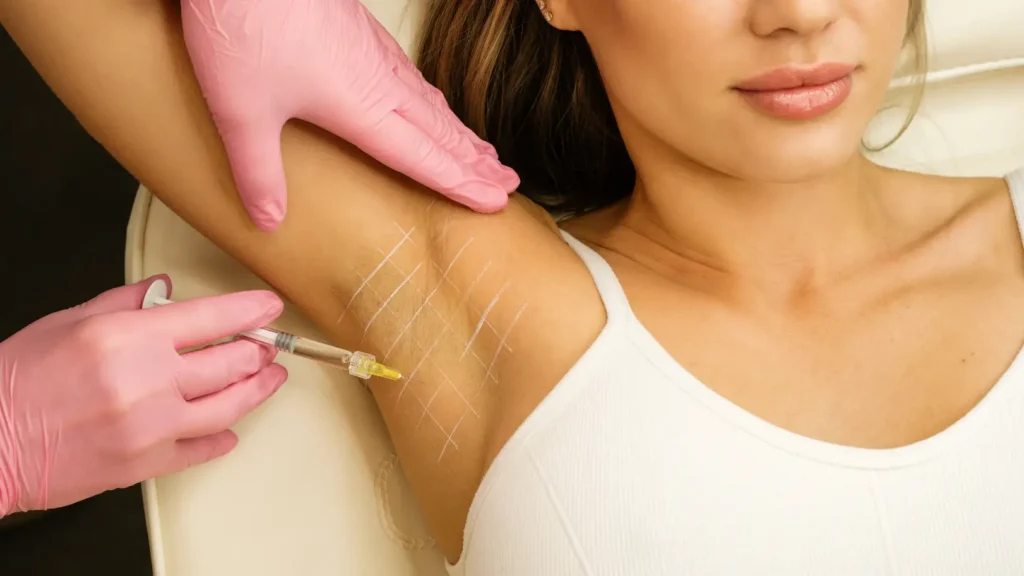
The underarms are one of the most common treatment areas because they respond well and can significantly improve daily comfort. Patients considering Botox for underarm sweating often appreciate that the treatment is non-surgical, precise, and does not require extended downtime.
Why Botox Works for Hyperhidrosis
Understanding the science behind Botox makes it easier to see why this treatment has become such an important option for patients dealing with excessive sweat.
1. It Blocks Overactive Sweat Signals
The main reason Botox works for hyperhidrosis comes down to nerve communication. Sweat glands become active when nerves release a chemical messenger called acetylcholine. In patients with hyperhidrosis, this signaling can become excessive, causing sweat production even when the body does not need to cool itself.
So, how does Botox stop sweating? Botox temporarily blocks the release of that chemical messenger in the treated area. Without that signal, the sweat glands become less active. The body can still sweat normally in untreated areas, but the targeted region produces significantly less perspiration.
This is why Botox can be so effective for underarm sweating. It does not change the body’s entire temperature-regulation system. It simply calms the overactive glands in the area causing the most concern.
2. It Targets the Problem Area Precisely
One of the advantages of Botox is its precision. Hyperhidrosis does not always affect the whole body. Many patients have one specific area that causes the most embarrassment or discomfort, such as the underarms or palms.
A provider can place small injections directly across the affected area. This allows the treatment to focus where it is needed most without creating unnecessary effects elsewhere.
For patients searching for a Botox for excessive sweating treatment, this targeted approach can feel incredibly practical. Rather than relying on stronger antiperspirants or constantly changing clothing, patients can address the sweat glands themselves.
3. It Helps When Antiperspirants Are Not Enough
Many patients try clinical-strength antiperspirants before seeking professional care. While these products can help with mild sweating, they are not always enough for true hyperhidrosis. Excessive sweating can soak through clothing, cause visible stains, and create skin irritation. Some patients find themselves reapplying products multiple times a day without meaningful relief.
Botox offers a different level of control because it works beneath the skin at the nerve-gland level. Instead of trying to block sweat after it forms, Botox reduces the signal that causes sweat production in the first place.
4. It Can Improve Daily Confidence
The emotional impact of hyperhidrosis is often underestimated. Patients may avoid light-colored shirts, skip certain fabrics, keep extra clothing nearby, or feel anxious before meetings and social events. When sweating becomes less unpredictable, confidence often improves. Patients may feel more comfortable participating in activities without constantly worrying about sweat marks or body odor.
This is one reason a neuromodulator for sweating med spa treatment can feel life-changing for the right patient. The benefit is not only physical dryness. It is the ease that comes from no longer planning the day around sweat.
5. Results Can Last for Months
Botox is not permanent, but its effects can last for several months. Many patients notice reduced sweating within days to two weeks after treatment, with results commonly lasting around four to six months. Some patients may experience longer or shorter durations depending on metabolism, treatment area, and individual response.
Maintenance appointments can help preserve results. For patients who struggle most during warmer months, before special events, or during high-stress seasons, treatment timing can be planned strategically. Because results fade gradually, patients can work with their provider to decide when retreatment makes sense.
6. It Is Non-Surgical and Efficient
Hyperhidrosis can feel overwhelming, but treatment does not have to be complicated. Botox appointments are generally efficient, and most patients return to normal activities shortly afterward.
The treatment involves a series of small injections across the affected area. Discomfort is usually brief, and providers may use comfort measures depending on the treatment location. For patients who want meaningful sweat reduction without surgery, Botox provides an elegant middle ground: effective, targeted, and manageable.
7. It Can Reduce Skin Irritation Linked to Sweating
Excessive sweating can contribute to more than clothing concerns. Constant moisture may irritate the skin, especially in areas like the underarms, feet, or palms. Some patients experience chafing, rashes, or discomfort from repeated wetness.
By reducing perspiration in the treated area, Botox may help create a drier environment that feels more comfortable throughout the day. While it is not a treatment for every skin condition, reducing moisture can be an important part of improving comfort for patients affected by hyperhidrosis.
8. It Lets Patients Live More Freely
The best aesthetic and wellness treatments often do more than improve appearance. They help patients feel more at home in their daily lives. For someone with hyperhidrosis, simple moments can become stressful. Raising a hand, hugging someone, holding a pen, or walking into a meeting can trigger worry. Botox can help reduce that constant awareness.
Patients often describe the results as feeling lighter, cleaner, and more comfortable. It is not about eliminating the body’s natural function entirely. It is about bringing excessive sweating back to a more manageable level.
Why Provider Experience Matters
Although Botox is widely performed, hyperhidrosis treatment requires precision and anatomical understanding. The goal is to distribute the product evenly across the affected area while using an appropriate dose for the patient’s symptoms and goals.
A skilled provider understands how to customize treatment rather than relying on a generic approach. This matters because sweat patterns, treatment areas, and patient needs can vary widely. The best results come from careful assessment, proper placement, and realistic expectations.
A More Comfortable Way Forward
Excessive sweating can be frustrating, but it does not have to control daily life. Botox offers a refined, science-backed way to treat hyperhidrosis by calming the overactive nerve signals that trigger sweat production. For patients who have tried antiperspirants and still struggle with visible moisture, discomfort, or self-consciousness, Botox may provide meaningful relief.
At Fame By You, patients receive personalized care designed to help them feel more confident and comfortable in their skin. Through thoughtful consultation and precise treatment planning, the practice offers Botox for sweating as an elegant solution for patients seeking greater ease, dryness, and confidence in everyday life.
Contact us today to schedule your appointment!

