

Laser treatments can do impressive things for skin, but they do not work independently of what is already happening inside it. Pigment matters. Recent sun exposure matters. Even a tan that looks healthy on the surface can change how the skin interacts with light-based energy.
That is why timing can be such an important part of laser skin rejuvenation. Many laser treatments work by directing controlled energy toward specific targets in the skin, and melanin can absorb some wavelengths of that energy. When the skin contains more melanin after tanning, treatment parameters and risk considerations may change.
Keep reading to understand the science behind that interaction and why winter can create a useful window for appropriately selected laser treatments.
How Melanin Changes Laser Energy
Laser safety starts with understanding where the energy goes after it reaches the skin. Melanin is one of the major chromophores, or light-absorbing targets, involved in many laser procedures, which makes skin tone and recent tanning important parts of treatment planning.
1. Melanin Absorbs Light Energy
Melanin is the pigment that contributes to the color of your skin, hair, and eyes. Within the skin, it also helps protect against ultraviolet radiation by absorbing and dispersing some UV energy. Lasers introduce a different form of controlled light energy.
Depending on the wavelength being used, melanin can absorb some of that laser light. The absorbed energy is converted into heat. This principle can be useful when pigment itself is the intended target, such as with certain treatments for freckles or sun spots. The challenge is selectivity.
A provider wants enough energy to reach the intended target without creating excessive thermal injury in surrounding tissue. That balance is one reason wavelength, pulse duration, energy level, cooling, treatment depth, and skin type all matter.
Melanin laser absorption is therefore neither inherently good nor bad. It is a physical interaction that providers must account for when selecting a laser and its settings. Understanding that principle also helps explain why laser treatment should be personalized rather than performed with identical settings on every patient.
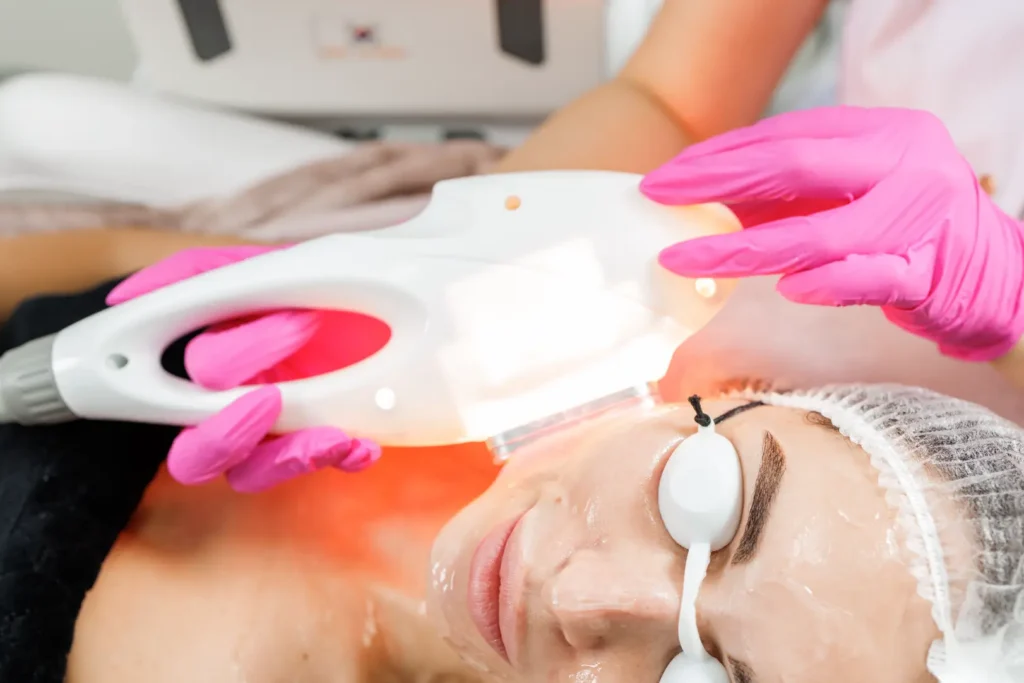
2. A Tan Adds More Competing Pigment
A tan is your skin’s response to ultraviolet exposure. UV radiation can stimulate increased melanin production, causing the skin to become darker. That additional pigment matters during laser treatment.
If a laser wavelength can be absorbed by melanin, recently tanned epidermal skin may absorb more energy than it would at the patient’s baseline skin tone. In certain treatments, that can make it harder for the laser to distinguish between the intended target and surrounding pigmented skin. This helps answer the common question: why can’t you get laser treatment with a tan?
It is not simply an arbitrary rule designed to make scheduling difficult. Depending on the laser and treatment being performed, a recent tan can increase the risk that unwanted energy is absorbed by epidermal melanin.
The result can be greater concern for burns, blistering, irritation, or unwanted pigment changes. Not every laser interacts with melanin identically, so treatment decisions must be device-specific. Still, recent tanning is information your provider needs before proceeding.
3. More Absorption Can Mean More Heat
Laser energy does not disappear after entering the skin. When a target chromophore absorbs the appropriate light energy, that energy can be converted into heat. Controlled thermal effects are part of how many laser treatments work.
Problems can arise when too much energy is absorbed in tissue that was not supposed to receive that degree of heating. This is one reason tanned skin laser risk deserves attention. Increased epidermal melanin can potentially compete for laser energy, depending on the wavelength being used.
The provider must consider whether the treatment can be safely adjusted or whether it should be postponed until the tan has faded. Turning the laser down is not always a simple solution either. Settings still need to deliver enough energy to accomplish the intended treatment goal.
Safe laser treatment is about finding a therapeutic window. The provider needs to balance effectiveness against the skin’s capacity to tolerate the selected energy.
4. Wavelength Determines What Absorbs the Energy
Not all lasers are interchangeable. One of their defining characteristics is wavelength, which influences how deeply light penetrates and which chromophores absorb it. Melanin absorbs certain wavelengths more strongly than others.
That is why asking whether “laser” is safe for a particular skin tone is too broad. The more useful questions involve which laser, which wavelength, what treatment target, and which settings.
Some technologies are better suited than others for patients with more epidermal melanin. Experienced providers can select devices and parameters with skin type in mind. This principle applies to both naturally darker skin tones and temporary tanning, but those situations should not be treated as identical.
A naturally melanin-rich complexion is a baseline skin characteristic that should be incorporated into treatment selection from the beginning. A recent tan represents a temporary change caused by UV exposure and may prompt the provider to delay certain procedures. Laser expertise means understanding both situations rather than treating “pigment” as one category.
5. Melanin Can Compete With the Intended Target
Imagine sending a package to one specific house while several nearby houses suddenly display the same address. Delivery becomes more complicated. Laser energy can face a somewhat similar problem when melanin is both the intended target and abundant in surrounding tissue.
For a treatment targeting a discrete brown spot, the goal may be to create a controlled effect within unwanted pigment. If surrounding epidermal skin is heavily tanned, there may be less contrast between the lesion and the surrounding tissue.
That competition can influence treatment planning. It is one reason laser and sun exposure should be discussed before an appointment rather than after the laser has already been used. Providers may ask about recent tanning, vacations, outdoor activities, tanning beds, and changes in skin color.
Those questions are part of assessing whether the skin is currently suitable for the planned procedure. Patients should answer them accurately, even if it means rescheduling. A delayed cosmetic treatment is far preferable to pushing ahead when the skin is not in an appropriate condition for it.
6. Pigment Changes Can Happen After Treatment
Skin pigmentation does not only matter before laser treatment. It can also change as part of the skin’s response afterward. Inflammation can sometimes trigger increased pigment production, known as post-inflammatory hyperpigmentation. Some patients are more prone to this response than others.
Conversely, excessive injury to pigment-producing cells can potentially result in areas of reduced pigmentation. This is why thoughtful laser treatment considers more than the immediate endpoint.
The provider evaluates the patient’s skin type, treatment history, current pigmentation, and the procedure being considered. Aftercare and sun protection are also important because freshly treated skin may be more vulnerable to environmental exposure.
For patients asking if sun exposure affect laser results, the answer is that UV exposure can matter before and after many laser procedures. Before treatment, tanning can alter the amount of melanin available to absorb energy.
Afterward, UV exposure can contribute to unwanted pigmentation and interfere with the goal of creating a clearer, more even-looking complexion. Sun protection is therefore part of the treatment plan, not an optional extra.
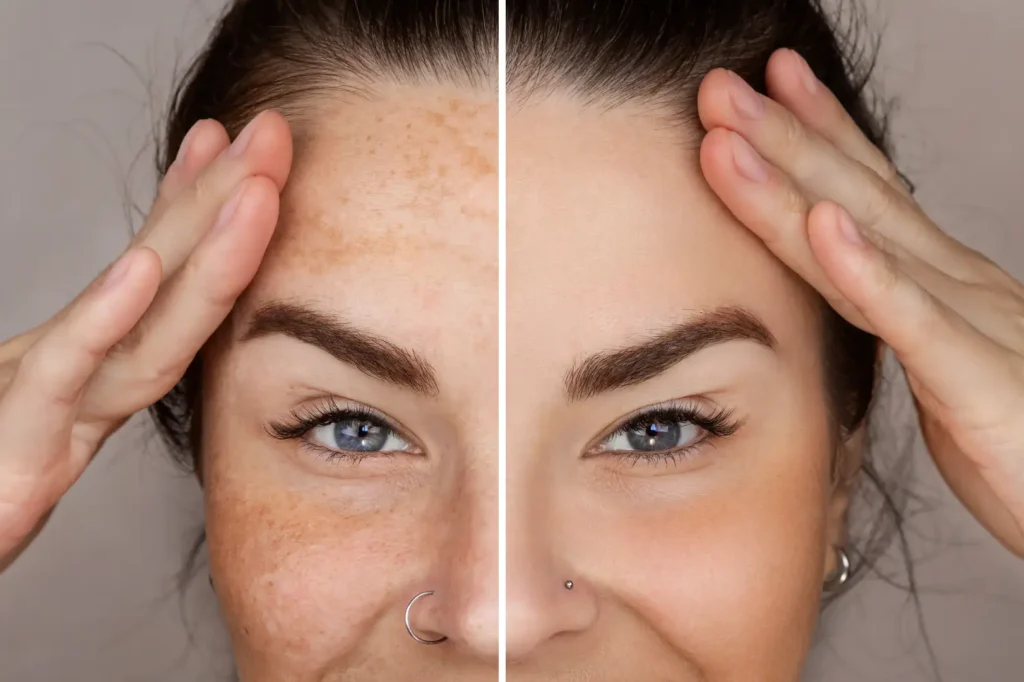
7. Winter Can Reduce One Major Variable
Winter does not magically make laser treatment safe. What it can do is make one important variable easier to manage: UV exposure. Days are shorter, clothing covers more skin, and many people naturally spend less time outdoors.
For patients who spend summer weekends at pools, beaches, sporting events, or outdoor gatherings, that lifestyle shift can make treatment planning simpler. This is where post-summer laser timing becomes useful.
After summer ends, the skin has an opportunity to move away from recent tanning and intense UV exposure. Once a provider confirms that the skin is appropriate for treatment, winter may offer a more manageable period for starting a laser series. That does not mean October 1 automatically makes every tan irrelevant.
A tan needs time to fade, and the appropriate waiting period varies with the procedure, device, degree of tanning, and individual skin. The provider should make that determination rather than relying solely on the calendar. Winter is an opportunity, not a guarantee.
8. Less UV Can Make Aftercare More Practical
Avoiding unnecessary UV exposure after treatment can sound easy during consultation. Then real life happens. A summer calendar may include vacations, beach weekends, outdoor exercise, gardening, festivals, and hours spent around the pool. Even patients who are diligent about sunscreen can find themselves exposed more often than expected.
Winter can simplify that routine. Patients may find it easier to limit direct exposure while their skin recovers. Protective clothing can also provide another physical barrier for treated body areas.
Sunscreen remains important year-round. UVA radiation does not disappear simply because temperatures drop, and exposure can still occur through daily activities. The difference is practical rather than absolute.
When there are fewer high-UV activities competing with aftercare, patients may find it easier to follow their provider’s recommendations consistently. That can make winter an appealing season for a planned course of laser skin rejuvenation.
Let Your Skin Set the Timing
Melanin is not an obstacle to laser skin rejuvenation. It is part of the biology that determines how light interacts with skin, and understanding that interaction helps providers choose treatments, settings, and timing more thoughtfully.
At Fame By You, laser treatment can begin with an assessment of your skin rather than a one-size-fits-all protocol. Winter may offer a convenient window as summer tanning fades and UV exposure becomes easier to manage, but the best time is ultimately when your skin is appropriately prepared for the treatment being considered.
Call us today to book your appointment!

